Work is a Spectrum
Why the 9-to-5 contract expired and how progressive organisations are redesigning the future of talent.


If I asked you to draw a picture of work, what would you sketch?
If you’re like most people, your brain defaults to the grayscale blueprint of a Monday to Friday, 9-to-5 and 3 day a week commute to a mildly disappointing office. At some point in our upbringing, perhaps by our parents, teachers or media, we’ve been conditioned to view this very narrow slice of work as the only worthwhile possibility.
But, this is in fact far from the reality.
Look at your own friends. You likely know a teacher whose rhythm is dictated by term times, a nurse whose life happens in the night shifts you never see or an actor whose office is a West End stage.
They all work one full-time job. They’re all employed on payroll. But, none of their lives look anything like the picture of work you sketched.
But, what if I told you they’re actually the most familiar?
Step even further afield and you’ll discover the creators who are paid for their popularity, the writers who earn from their words and the portfolio careerists building companies of one. Ask any of them about work and you begin to realise that the possibilities are actually endless.
This is because work is a spectrum.
It extends the entire way from the side project you don’t get paid for to the boardroom presentation you’re thinking about all weekend to the part-time job you picked up one Summer to pay the bills.
Each and every one of them is work.
And they all deserve equal consideration.
Everyone Wants to Be a Creator
A couple of decades ago, you could write off those operating on the ends of the spectrum as anomalies. They were the outliers, the digital nomads or the starving artists to be ignored while everyone else put their heads down and climbed the predictable rungs of the corporate ladder.
But today, what was once the fringe has become the destination. We are witnessing a generational migration across the spectrum of work.
Look at the data:
Over half of Gen Z (51%-60% depending on the market) are already running a side hustle. For the youngest in the workforce, a job title is just one part of a larger portfolio.
Children in the UK and US are now 3x more likely to want to be a YouTuber or digital creator than an astronaut when they grow up.
To traditionalists, this data is often dismissed as a symptom of an entitled generation looking for easy internet fame or a quick shortcut. And with grifters out there promising them the world, there is some truth to it.
But when you peel back the layers, you begin to see that it’s economic self-defense rather than youth laziness that’s driving this shift. The next generation is job hopping, quiet quitting and handing in their notice faster than ever because the contract underlying the 9-to-5 has now expired.
The Expired Corporate Contract
The post-industrial corporate ladder was built on an implicit promise: Give us your youth, your exclusive focus and 40 hours a week, and we’ll give you a house, a predictable career path and a retirement you can look forward to.
Today, the maths behind that single paycheck life simply doesn’t add up.
Data from ONS illustrates that in 1997, the average UK home cost roughly 3.5x the average annual earnings. By the mid-2020s, that national ratio hit over 8.5x earnings and now sits at a wildly unsustainable 10-12x earnings across London boroughs.
When a traditional corporate salary can no longer guarantee the most basic milestones of adulthood like financial security, a home or long-term security, the standard setting becomes a losing proposition.
Designing your life across the spectrum of work is no longer a trendy lifestyle choice driven by Instagram influencers. It is now a rational realignment of a personal balance sheet to diversify across several income streams where the corporate contract has failed.
Organisations Must Adapt
Whenever I talk about the spectrum of work, traditional business leaders tend to panic. They assume the logical conclusion of this generational shift is that every single high performer will hand in their notice to build a solo start-up, sell digital courses and become a van lifer.
But, don’t worry. The answer isn’t for everyone to become an entrepreneur.
The global economy still needs scale, collective infrastructure and world-class teams who want to solve our biggest problems.
This shift along the spectrum is really about organisations empowering their people to take Career Ownership. It’s about moving from an era of compliance to an era of entrepreneurial drive within the organisation.
To survive this talent migration, companies must abandon the outdated one-size-fits-all model and design a more fluid architecture.
Shifting to Co-Created Life Design
In the old contract, the company designed a rigid, static ladder and expected the employee to squeeze their entire identity and ambition into it. In the new landscape, attraction and retention are the realm of Co-Created Life Design.
Rather than assume every employee has the exact same milestones in mind, forward-thinking organisations are already dismantling the rigid 9-to-5 sketch to offer Personalised Pathways:
Fluid Engagement Models (Like Unilever’s U-Work): To bridge the gap between employment and contracting, pioneers like Unilever launched U-Work. This framework provides employees with a core monthly retainer and access to standard corporate benefits, but gives them the complete freedom to build a portfolio of diverse projects both inside and outside the company. It allows talent to step onto the spectrum without sacrificing structural security.
Strategic Sabbaticals (Like Deloitte): Instead of forcing a burnt-out executive to completely resign to pursue an external passion, progressive organisations use structured pauses as a retention tool. Take Deloitte’s Sabbatical Program, which allows employees to take up to six months of unpaid leave to pursue personal or professional growth with a guaranteed role upon return. This allows elite talent to reset their energy levels, acquire fresh cultural capital or skills externally and bring that renewed value right back into the business.
Fractional & Flexible Integration (Like Zurich Insurance): High-performers are increasingly unwilling to trade 100% of their identity for a full-time paycheck. In response, Zurich Insurance made a massive corporate pivot by registering every single vacancy in the company as potentially part-time, job-share or fractional. The result was a massive surge in high-quality applications for senior and executive roles. Normalising fractional corporate capacity allows businesses to retain institutional memory and elite brains who only want to give 3 days a week.
Escaping the Binary Trap
Implementing these flexible policies requires a shift in mindset.
Right now, the default is to treat talent like a light switch. You are either 100% in as a full-time employee or you are 100% out and completely disconnected from the ecosystem. When someone hands in their notice to explore the spectrum, it’s treated as a messy breakup and the relationship ends.
This is a catastrophic waste of human capital.
When you move past the rigid label of an employee, you realise that an exit is simply a transition point. Those who step off the traditional track can easily become Lifetime Advocates who join as your future clients, your plug-and-play fractional supply chain or your highest-converting recruitment channel.
The organisations that thrive in the coming decade will be the ones who build a wider basecamp by accepting that work is no longer a static place you go to or a single label you wear.
Work is a spectrum. And it’s time we started designing our lives—and our organisations— to match it.
Want to stop navigating a traditional career ladder and start designing a life across the spectrum?
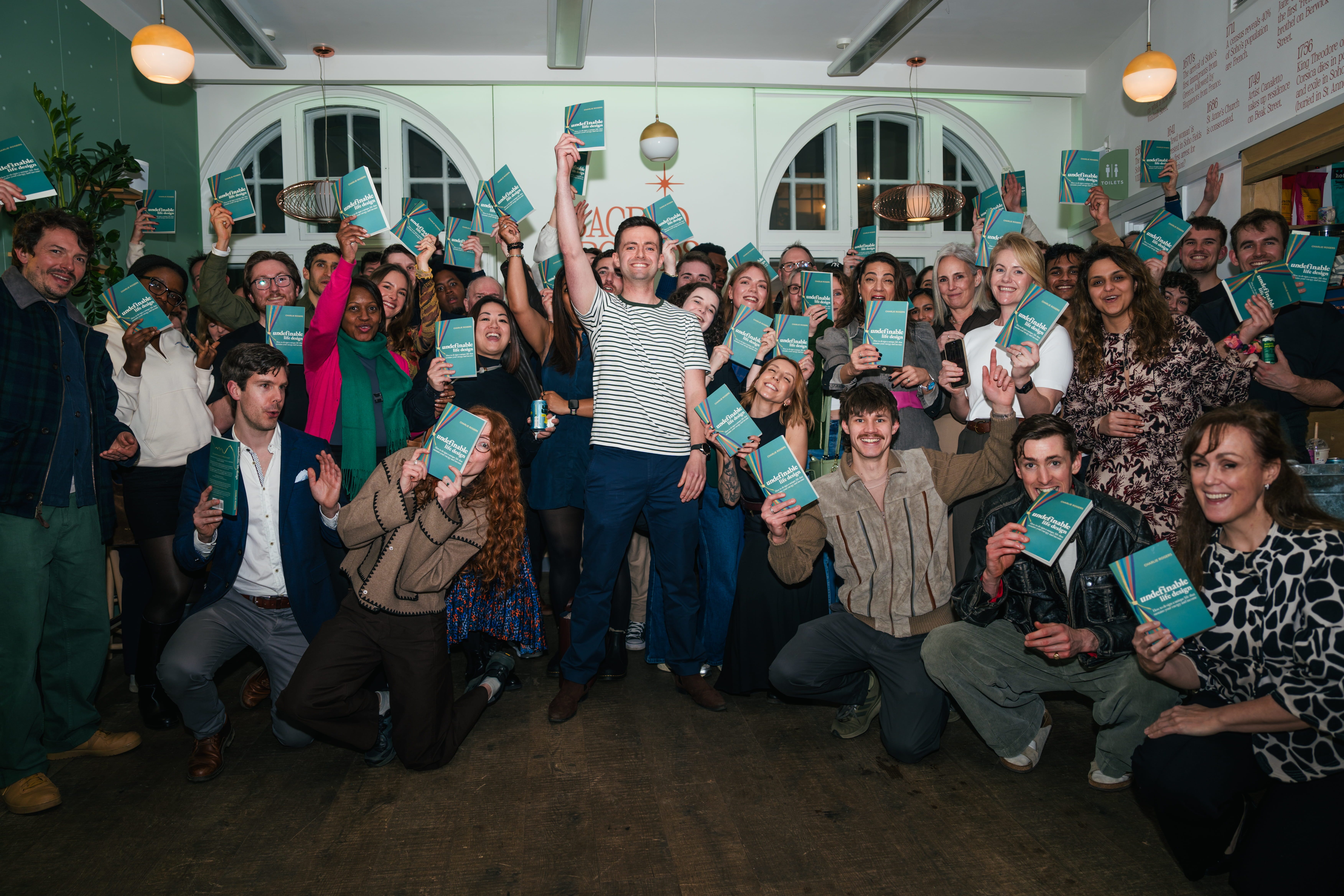
Grab your copy of my bestselling book, undefinable life design to unlock the tools, frameworks and mindset to design a unique life that sustains both your energy and your income. Now with 38 five star reviews.